Stanford CS '26 · IPhO Gold
William Huang
IPhO Gold (2021). Lynbrook graduate (2022). Harvard Med Researcher (2023). NeurIPS first author (2024). Waymo patent creator (2025). Stanford CS BS (2026).





About
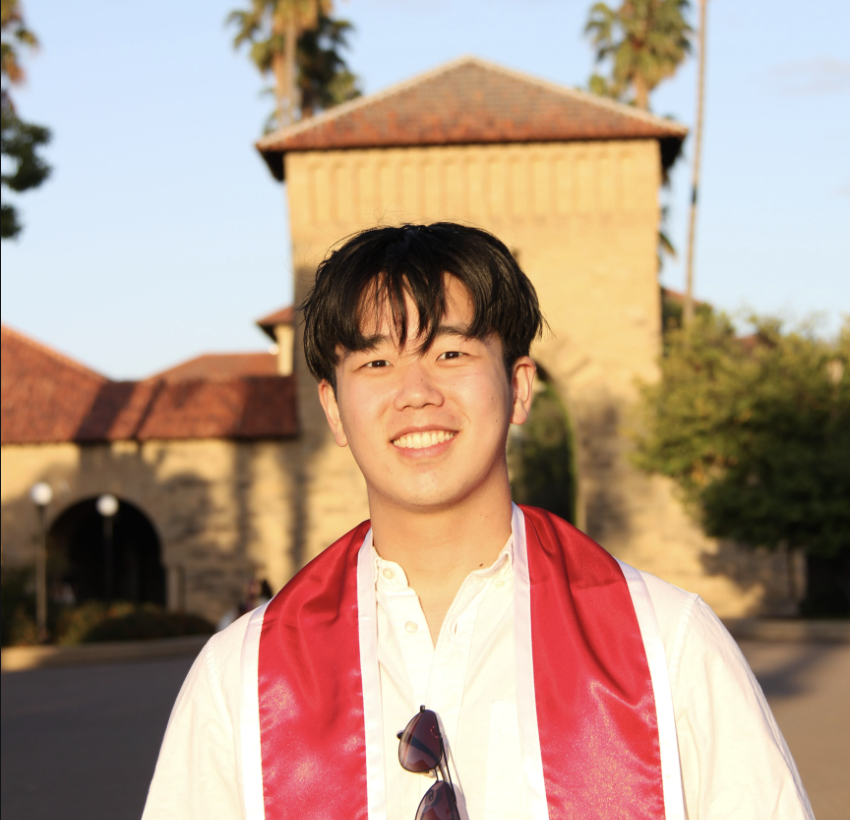
I'm William, I studied CS Systems and Computer Architecture at Stanford. When I was a kid, my parents took me to The Physics Show, and since then I've always found beauty in the predictive power of physics, leading me to the International Physics Olympiad. My journey in pursuing the beauty in physics has led me to explore AI and hardware, where I hope to one day change the world.
Get in touch at willsh@stanford.edu.
Projects
Projects. A selection of featured projects.
- Sparse Bird’s-Eye-View Backbone for Autonomous Vehicle PerceptionA novel sparse architecture for efficient perception in self-driving vehicles, created in collaboration with Waymo. Patent pending.Learn more
- sv-excel-agentAn open-source Excel AI agent that uses MCP tools to let LLMs read, edit, and automate spreadsheets.Learn more
- Automated CUDA Kernel Generation via RL on LLMsProject for CS234. LoRA and GRPO on DeepSeek-R1-Distill-Qwen1.5B to generate better CUDA kernels.Learn more
- CNN AcceleratorA 16x16 systolic array optimized for ResNet-18, implemented with Catapult HLS for EE272.Learn more
- PPA Optimized Triangle RasterizerA power, performance, and area-optimized triangle rasterizer achieving a top 10% FoM in a graduate-level VLSI course.Learn more
- OnCourseA course planning application used by 10,000+ students at Stanford University.Learn more
Writing
Writing. A selection of my research.
- Constrained Diffusion with Trust SamplingA training-free loss-guided diffusion method for SoTA constraint following in image and human motion task (NeurIPS 2024).Read more
- Autoregressive DiffusionAutoregressive Diffusion for Long-Term Controllable Motion Synthesis (CURIS 2023).Read more
- Cross-domain Adaptation of Vision-Language Foundation Models for Medical ApplicationsInvestigation of effectiveness of general image-text pretraining and finetuning on medical vision-language transformers.Read more